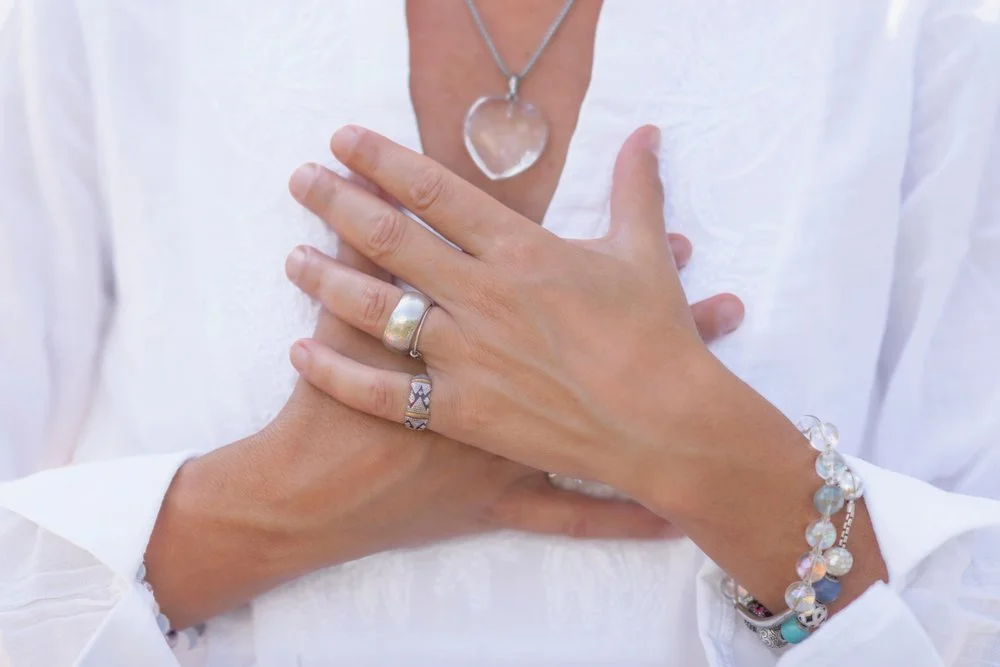
5 Meditation Myths That Kept Me From Starting

For years, I told myself I wasn't the meditation type. I was too anxious, too busy, too... something. And then I became a mother, got sober, and realized I desperately needed tools to handle the overwhelm that was swallowing me whole. But even then, I almost didn't start. Because I had already decided these ‘facts’ that kept meditation feeling impossible.

"You Need to Clear Your Mind Completely"

This is the big one. I thought meditation meant achieving some zen state where thoughts just... stopped. So every time a thought popped up (which was every three seconds), I figured I was failing.

Here's what nobody told me: thoughts are supposed to happen. Your brain literally produces thousands of thoughts per day. Meditation isn't about stopping them. It's about noticing them without getting swept away by them.

When I finally understood this, everything changed. I stopped fighting my busy mind and started gently redirecting my attention. That's the practice. That's literally it.

"You Need at Least 20-30 Minutes"

As a new mom, I barely had time to shower. The idea of carving out half an hour for meditation felt laughable. So I didn't even try. But here's the truth: even two minutes counts. Seriously. Two minutes of intentional breathing while your baby naps is meditation. One minute of mindful presence while holding your child is meditation. So I started with literally 60 seconds. Just sitting still and breathing. Some days that's still all I can manage, and it's enough. The consistency matters more than the duration.

"You Have to Sit Cross-Legged on a Cushion"

I had this whole image in my head of what a "real" meditator looked like. Definitely not me in my pjs, sitting on my couch at 3pm trying not to lose it.

You can meditate anywhere, in any position. I've meditated:

  • Lying in bed (not sleeping, just being present)

  • Standing at the kitchen counter

  • In the shower

  • While pushing a stroller

Your body doesn't need to look a certain way. Your space doesn't need to be Instagram-worthy. You just need to show up exactly as you are.

"Meditation Is About Feeling Calm and Peaceful"

This myth almost broke me. Because in early motherhood and early sobriety, I rarely felt calm. I felt anxious, overwhelmed, angry, sad, terrified…so many things, but rarely peaceful.

I thought meditation wasn't "working" because I wasn't achieving some blissed-out state.

But meditation isn't about manufacturing good feelings. It's about being present with whatever feelings are actually there. Sometimes my meditation practice is just acknowledging "wow, I'm really struggling right now" and breathing through it. The peace comes not from feeling calm, but from being willing to sit with yourself no matter what's showing up.

"If You're Not Good at It, It's Not Worth Doing"

This is the perfectionist trap I fell into hard. If I couldn't meditate "correctly" (whatever that meant), why bother? But meditation isn't a performance. There's no good or bad at it. Some days your attention wanders constantly. Some days you feel fidgety and uncomfortable. Some days you fall asleep. All of that is completely normal and still valuable. In fact a side effect of developing my imperfect meditation practice was letting go of so much of the perfectionist stuff going on with me with, well… everything.

Every single time you notice your mind has wandered and gently bring it back, you're strengthening your awareness. That's the workout. The wandering isn't the failure. It's actually the opportunity to practice.

What Finally Got Me Started

Once I released these stories I was holding on to, I gave myself permission to start small and messy. I got on Spotify. Put my headphones in. Listened to a guided meditation. Sat on my couch and breathed. Was it perfect? No. Did my mind wander? Constantly. Did it change my life? Gradually, yes.

Because here's what I discovered: meditation didn't make my problems disappear. It didn't make motherhood easier or sobriety simple. But it gave me a way to be with myself through all of it. It created tiny pockets of space between stimulus and reaction. It helped me find my center when everything felt chaotic.

And it can do the same for you. No special cushion required, no empty mind expected, no perfect circumstances demanded.

Ready to start your own practice but not sure where to begin? I've created simple, realistic meditation guides specifically for exhausted moms and people in recovery who need tools that actually fit into real life.

How Sobriety Made Me Realize I'd Been Meditating 'Wrong' All Along

I tried meditation for years before getting sober. I'd download apps, set intentions, maybe stick with it for a week before life got busy and I'd drift away. I thought the problem was me. That I wasn't disciplined enough, wasn't spiritual enough, wasn't calm enough for meditation to "work." Then I got sober. And suddenly, everything about meditation made sense in a way it never had before.

What I Was Actually Doing Before

Looking back now, I can see what was really happening: I was using meditation as another form of escape. I wanted it to make me feel peaceful so I wouldn't have to feel anxious. I wanted it to quiet my mind so I wouldn't have to hear my own thoughts. I wanted it to fix me so I wouldn't have to actually change anything about my life. I tried to make my yoga and meditation the thing that made me me, found me a way out of discomfort like drinking had been.

When it didn't work that way (because that's not how meditation works), I'd get frustrated and quit. Then I'd pour a glass of wine from the bottle I’d eventually finish, and tell myself I'd try again.

The Brutal Truth Sobriety Taught Me

In early sobriety, you can't run anymore. You can't numb out. You can't escape yourself. You have to sit with the anxiety, the boredom, the grief, the rage, the fear. all of it. Raw and unfiltered. And that's when meditation finally clicked for me. Because I realized: meditation isn't about feeling better. It's about feeling, period.

It's not a tool to escape discomfort. It's a practice of being present with whatever's actually here, comfortable or not. When I approached it that way, everything changed.

The Meditation Practice Sobriety Demanded

In those early months of sobriety, my meditation practice looked nothing like the peaceful, blissed-out vision I'd had before. Some days I'd sit down to meditate and immediately start crying. Other days I'd be so restless I could barely make it through five minutes. Sometimes I'd feel anger bubbling up, or shame, or terror about facing life without my coping mechanism.

But here's what was different: I stayed. I didn't try to fix those feelings or breathe them away or transcend them. I just acknowledged them. "Oh, there's anxiety." "There's sadness." "There's the urge to run." And then I'd breathe. Not to make the feelings go away, but to be present with them.

That was the meditation practice sobriety taught me. Not escaping, but witnessing.

Why This Changed Everything

Before, when difficult emotions came up in meditation (or in life), my pattern was: feel uncomfortable → judge myself for feeling uncomfortable → try to fix it → get frustrated → give up. Drink.

In sobriety, I learned a different pattern: feel uncomfortable → notice I'm uncomfortable → breathe → stay.

It sounds simple, but it was revolutionary.

Because for the first time, I was building trust with myself. I was proving to myself that I could sit with hard things and survive them. That I didn't need to numb or escape or avoid. That the feelings wouldn't destroy me. Every time I sat in meditation with discomfort and didn't run, I got stronger. Not in a "power through it" way, but in a "I can be with myself no matter what" way.

The Practice That Saved Me

Here's the meditation that became my anchor in early sobriety:

I'd sit down and place my hand on my heart. Then I'd ask myself: "What's here right now?" Sometimes the answer was: anxiety, exhaustion, craving, fear, loneliness.

Instead of trying to change it, I'd just name it. "This is what anxiety feels like in my body." "This is grief." "This is the urge to escape."

I'd notice where I felt it. The tightness in my chest, the churning in my stomach, the tension in my shoulders. And then I'd breathe with it. Not to fix it, but to be with it. Like sitting with a friend who's hurting. You don't try to solve their problems, you just show up.

That became my practice: showing up for myself, exactly as I was, without trying to be different.

What Meditation Taught Me About Sobriety (And Vice Versa)

The parallels between meditation and sobriety became impossible to ignore:

Both require you to be present with discomfort. You can't meditate your way out of difficult feelings, and you can't stay sober by avoiding them. You have to be willing to feel.

Both are about coming back, not being perfect. In meditation, your mind wanders and you bring it back. In sobriety, you have hard days and you recommit. The practice is in the returning.

Both teach you that you are not your thoughts. You can watch cravings arise in meditation the same way you watch anxious thoughts arise - with curiosity instead of identification. You don't have to act on every thought that crosses your mind. (Life changing a ha moment for me right there in a nutshell!).

Both are a daily practice, not a destination. You don't "finish" meditation or "complete" sobriety. You just keep showing up.

Honestly, I don't know if I could have stayed sober without meditation. And I don't think I would have understood meditation without sobriety.

For Anyone Struggling With Both

If you're newly sober and trying to meditate, please know: it's supposed to feel hard right now.

You don't need to achieve some zen state. You don't need to feel peaceful or calm or blissed out. You don't need to do it "right." You just need to show up. Sit down. Notice what's here. Breathe.

Some days that will feel manageable. Other days it will feel impossible. Both are okay. The practice isn't about feeling better, it's about being willing to feel, period. And that willingness is everything. It's how you stay sober. It's how you heal. It's how you rebuild trust with yourself.

One breath at a time. One moment at a time. One day at a time.

That's the practice. That's the path. That's enough.

If you're navigating sobriety and looking for meditation practices that actually address the real, messy, hard parts of recovery, I've created resources specifically for this journey: no spiritual bypassing, no toxic positivity, just honest tools for staying present when everything in you wants to escape.

What Is Meditation? A Beginner’s Guide to Finding Stillness

Meditation has been practiced for thousands of years, but for many of us, it still feels like a mystery. Is it about emptying your mind? Sitting cross-legged for hours? Chanting mantras in a quiet cave?

The truth is much simpler: meditation is the practice of bringing your attention into the present moment. It’s training your mind, in the same way exercise trains your body. And just like exercise, it comes with incredible benefits. And just like exercise, one crunch doesn’t yield a six pack, so…

What Meditation Really Means

At its core (did I just make an ab joke), meditation is about awareness. It’s noticing your thoughts, feelings, and body but the key difference is: without judgment. Instead of getting swept away by stress, worry, or distractions, meditation gives you the ability to pause, breathe, and respond with clarity. When you sit in stillness and either listen to a guide, or read one, or try a specific method (more on those below) you are finding a way to work on that inner, ever-present monologue that can be your super power or your biggest pain point.

It took me a while to realize that this isn’t about “shutting off” your thoughts. Rather, it’s about changing your relationship with them. And while the outline or exploration of the process might seem simple, it can take time to have breakthroughs, time for a ha moments, time for realizations. But like we say in yoga, “practice and all is coming”.

The Benefits of Meditation

Science now backs up what ancient traditions have always known: meditation is powerful. Studies show it can:

  • Reduce stress and anxiety

  • Improve focus and memory

  • Boost emotional resilience

  • Lower blood pressure and support physical health

  • Increase feelings of calm, connection, and self-compassion

So if you keep thinking of it as mental strength training, the more you practice, the more benefits you’ll see in everyday life. We spoke about change before, about wanting a new result and preparing yourself and your community for your transformation. It’s hard not to come out on the other side of a continued practice miles away from where you started.

How to Begin A Meditation Practice

Ok so you’re curious. Sweet. If you’re new to meditation, you have to believe it’s ok to start simple. You don’t need fancy cushions, incense, or an hour of silence. I always felt like the barrier was too high, but this is for anyone. I suggest you:

  1. Find a quiet space. It doesn’t have to be silent, just somewhere you feel comfortable. Mine is a couch corner in my dining room (no judging).

  2. Set a timer. Start with 3 - 5 minutes. Even one minute is better than none.

  3. Focus on your breath. Notice the inhale, notice the exhale.

  4. When your mind wanders, just let it. You didn’t do something wrong. The wandering is the practice: every return strengthens your focus.

  5. Close with gratitude. Acknowledge the time you gave yourself.

And that’s really what I did, for maybe a week or two. Not every day that was impossible. But if I forgot or couldn’t make space, I would try again. Watch timer didn’t work. But leaving my notebook in a place it was kinda in the way did. So you might have to try a few ways to get to the thing that gets you consistent.

Different Types of Meditation

Not every practice looks the same. The more you explore, you WILL find what works for you. Personally I was no good at visualizations, because I didn’t have a happy place. Until I literally found a beach in Stari Grad Croatia that was the most beautiful thing I’d ever seen... now I visualize that. Water might annoy you or be triggering. So maybe you picture a mountain hike. Or a pinball arcade - legit not sure if you can find calm but it might for sure be your happy place. If you need a focus while you are meditating look up which one of these you think might suit you:

Mindfulness Meditation – focusing on the breath or body sensations
Mantra Meditation – repeating a word, sound, or phrase
Guided Meditation – listening to an audio or teacher’s voice
Movement Meditation – yoga, walking, or tai chi with awareness
Loving-Kindness Meditation – cultivating compassion for yourself and others

Why Meditation Is About Practice, Not Perfection

Many beginners quit because they think they’re “bad at meditation.” The secret is: there’s no way to fail. Every moment you sit down and return to your breath, you’re practicing. Growth comes through repetition, not perfection. Meditation is less about doing it right and more about showing up again and again.

Next Step: Try It for Yourself

If you’re ready to begin, I created a free Beginner’s Meditation Guide with a super simple practice you can try today.

👉 [Download Your Free Guide Here]

And if you’d like to go deeper, check out all of my Guided Meditation Downloads, a collection of audios designed to help you build calm, focus, and inner balance, one practice at a time.